April 8, 2026LoRa / Radio
GaFuBi — My LoRa Sensor Network for the Garden
LoRaESP32GaFuBiSensorsHome Assistant
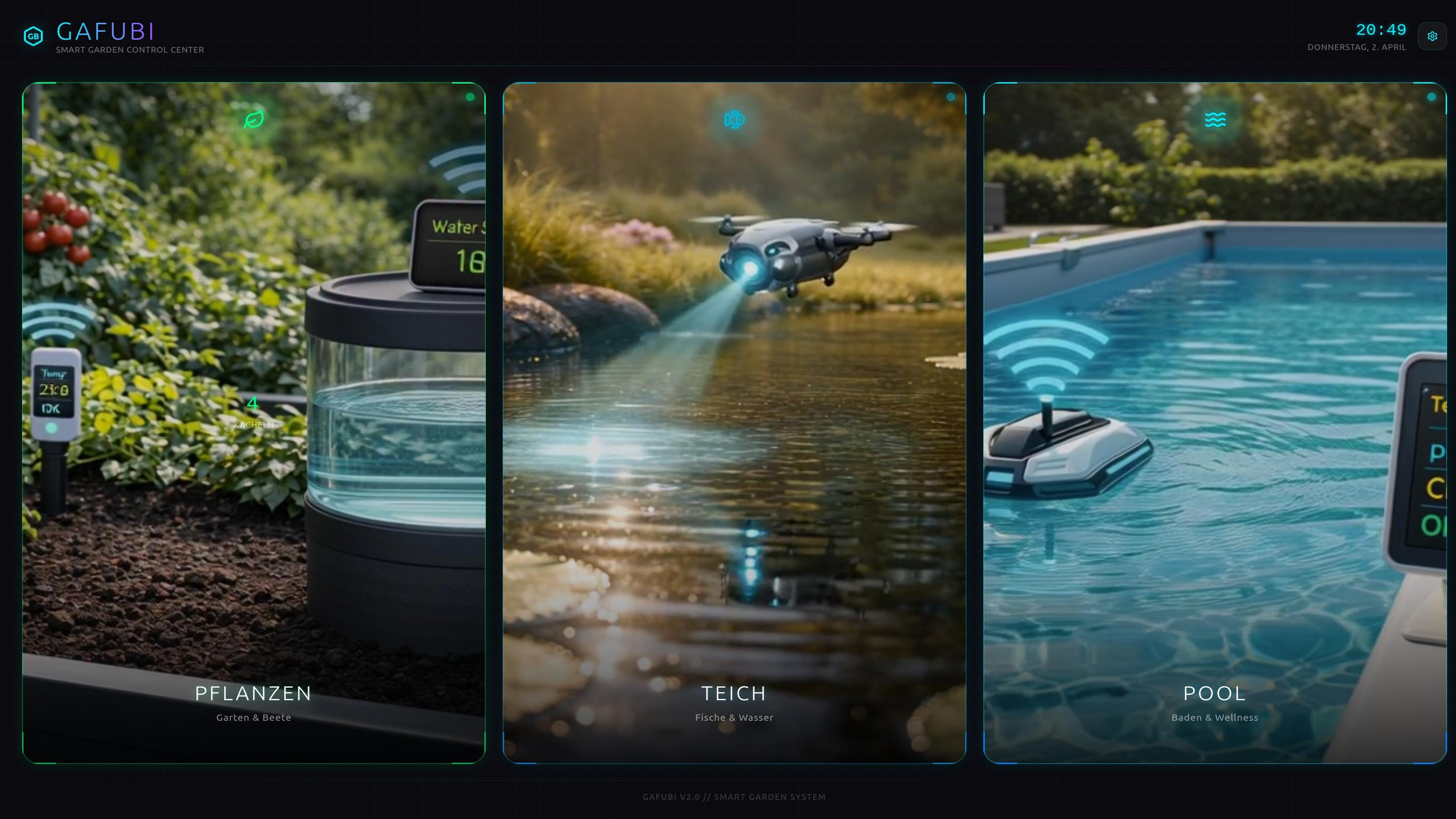
What is GaFuBi?
GaFuBi stands for GartenFunkBiene (GardenRadioBee) — and the name says it all. Like busy little bees, my sensor nodes swarm across the entire property collecting measurements: soil moisture, temperature, fill levels, and more.
Each GaFuBi is a standalone sensor node with a specific task. One monitors the water tank up on the hill, the next measures soil moisture in the vegetable bed, another watches the greenhouse temperature. They transmit their data via LoRa to a central gateway in the house — which forwards everything to Home Assistant.
The system grows with every idea. Need a new sensor? Build a new GaFuBi, register it, done.
Why LoRa Instead of WiFi? Extending Range in the Garden
My property is on a hillside — the water tanks sit up on top of the hill, the gateway is down at the house. WiFi gives up after 20-30 meters outdoors here. LoRa (Long Range) operates on 868 MHz and solves exactly this problem:
Range: Several hundred meters to kilometers. Across the property, through walls, up the hill — no problem.
Power consumption: A GaFuBi in deep sleep consumes almost nothing. Wake up, measure, send, sleep — the whole cycle takes just a few seconds. Still, battery life remains a challenge that I'm working on. Depending on send interval and sensor type, I currently get weeks to a few months.
Robustness: 868 MHz is far less crowded than the 2.4 GHz band. No interference from the neighbor's WiFi.
Zigbee would be an alternative but needs many repeaters for the distance and is less common outdoors.
The System: Gateway + GaFuBi Nodes
The network consists of two parts:
Gateway (Receiver): A Heltec Wireless Stick V3 inside the house, connected via USB. It receives all LoRa packets from every GaFuBi and forwards the data via MQTT to Home Assistant — including auto-discovery. One gateway for all nodes.
GaFuBi Nodes (Transmitters): Small ESP32 boards with LoRa module and their specific sensors. Each GaFuBi has its own task and a unique ID in the network.
All communication is AES-128 encrypted. Nobody can read what my GaFuBis are transmitting.
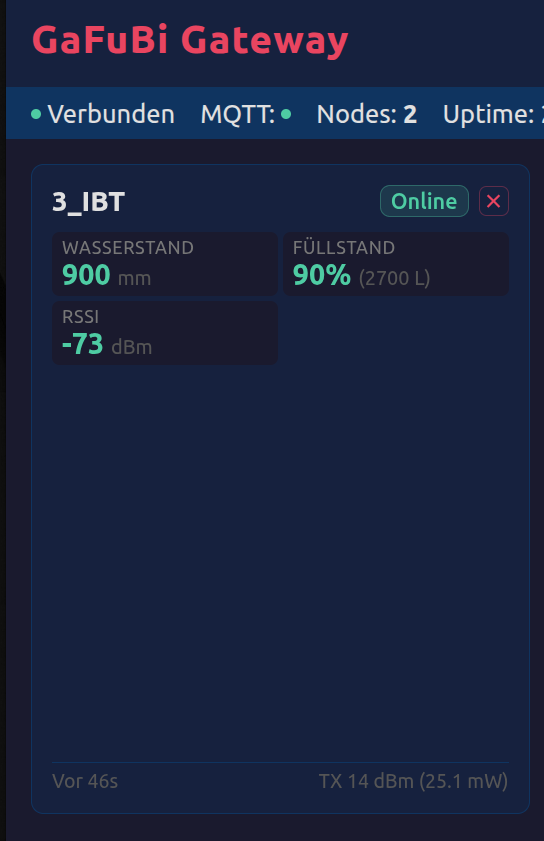
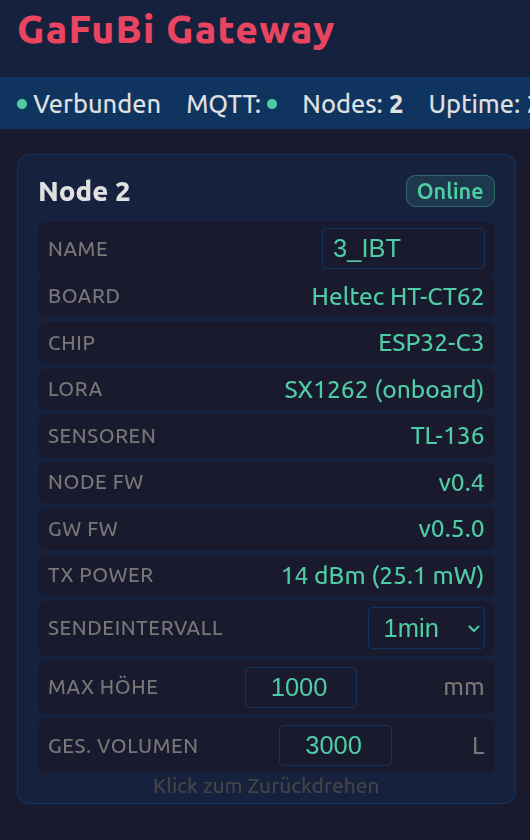
GaFuBis in Action: Cistern, Soil Moisture & Frost
Fill Level GaFuBi — Water Tanks on the Hill
My hillside property has a special setup: Rain gutters on the buildings below collect water into rain barrels. These are connected to a collection point — an IBC tote. When it's full, a solar pump pushes the water uphill into three more IBC containers. That's my garden water supply.
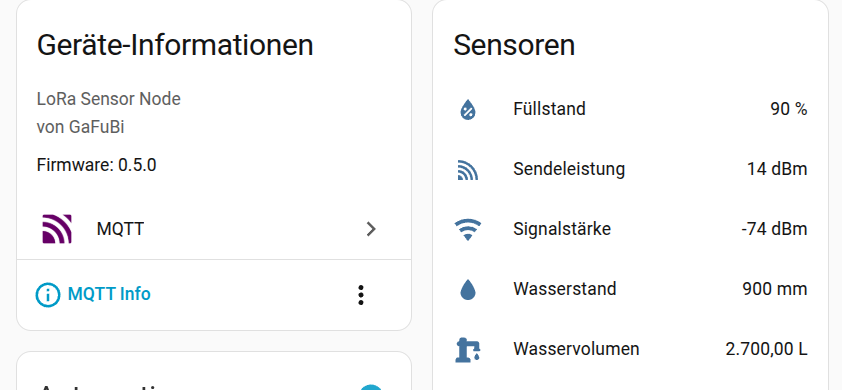
The problem: I can't see from below how full the tanks are up top. The fill level GaFuBi solves this. It uses a TL-136 level sensor and reports the water level via LoRa to the dashboard. When the tank is full, the pump stops. But it also monitors for sudden drops in water level — which likely means something is broken (hose disconnected, tap open, container leaking).
Soil Moisture GaFuBi — No More Guessing
Capacitive soil moisture sensors at various spots in the garden. When the value drops below the threshold, I get a notification. No more guesswork.
Temperature GaFuBi — Frost Warning Included
In the greenhouse, by the pond, and outdoors. Measures temperature and humidity. The frost warning has already saved my plants.
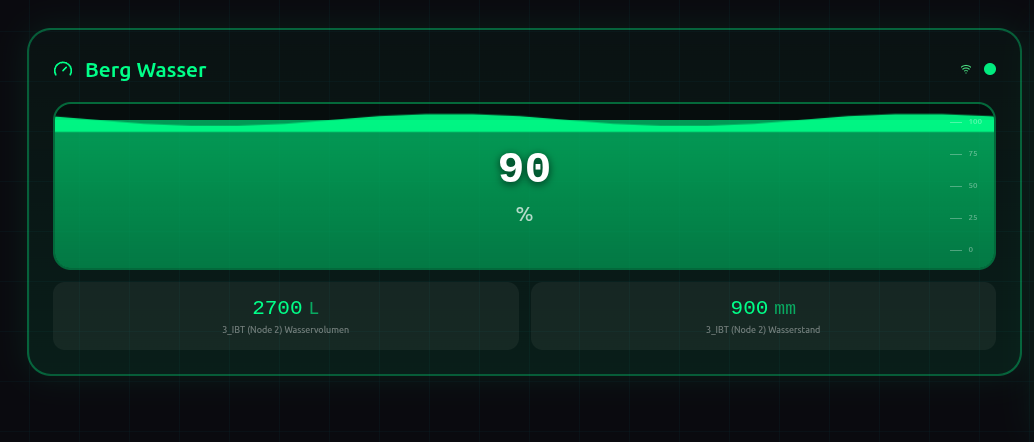
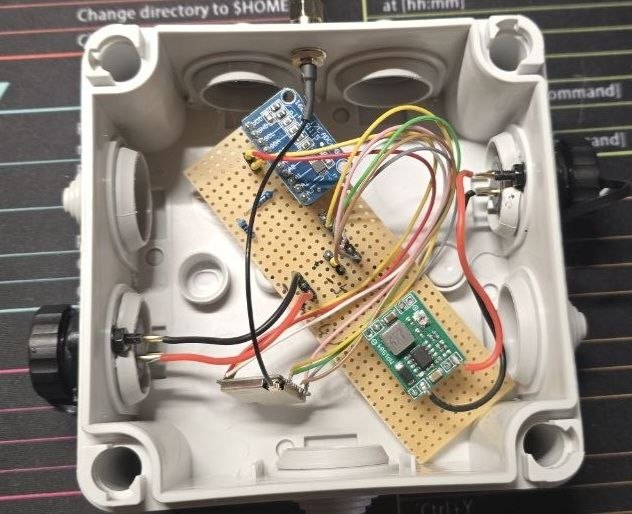
ESP32 Deep Sleep Battery Life: Power & Enclosure
The GaFuBis sit in weatherproof IP65 enclosures with cable glands for sensor cables. Important: ventilation against condensation, but no open hole for rain.
Power supply varies by GaFuBi:
- Battery (18650): For nodes that only send every 15 minutes
- Solar + battery: For nodes in hard-to-reach spots or with more frequent send intervals
Deep sleep mode is the key. An ESP32 in deep sleep consumes only ~10 µA. When active and LoRa transmitting, it's briefly ~120 mA, but only for a few seconds.
Honestly: Battery life remains the biggest challenge. In theory the nodes last months, in practice it heavily depends on the sensor and send interval. Some GaFuBis need charging every few weeks. There's still room for optimization.
Learnings & What I Would Do Differently
What works well:
- LoRa range is impressive — all the way up the hill, through walls, no problem
- Home Assistant integration via MQTT auto-discovery is seamless
- The GaFuBi concept makes the system modular and expandable
What was difficult:
- Antenna placement makes a huge difference. Inside a metal case = dead. Antenna needs to be external or at the enclosure window
- Capacitive soil moisture sensors need calibration — use "air" and "water" as reference, don't just take raw values
- Condensation inside enclosures during temperature changes — silica gel packs help
- Battery life: deep sleep helps enormously, but depending on the sensor it still doesn't last as long as hoped
What I would do differently:
- A unified enclosure design for all GaFuBis from the start
- Plan for more solar panels instead of relying on battery alone
Outlook: These GaFuBis Are Planned
The beauty of the GaFuBi system: for every new idea, I just build a new node. Currently planned:
Gas Bottle GaFuBi: A NAU7802 or HX711 load cell module under the gas bottle. Measures weight and warns before the gas runs out. No more unpleasant surprises while grilling.
Motion Detector GaFuBi: PIR sensor for specific areas in the garden. Notification on unexpected movement.
Water Main GaFuBi: Monitors the main water valve — flow or status.
Pond GaFuBi: Water temperature, pH value, and other pond parameters. So I know how the pond is doing without constantly dipping test strips.
Pool GaFuBi: Water temperature, salinity, and filter system pressure. The pool should largely monitor itself.
Automatic Irrigation: Valve control based on soil moisture data from existing GaFuBis.
And I'll probably think of the next one tomorrow.
More technical details about this project:
View Project →
Mike Sobczinski
Trained in automation and computer technology, working full-time in the semiconductor industry. Builds IoT solutions with ESP32, LoRa, and Home Assistant — from firmware to dashboard.
Learn more →